Initializing Systems

COSMOS

A Voyage Through The System

The Sun

THE SUN

The Star of Our Lives

The Sun lies at the heart of the solar system, where it is by far the largest object. It holds 99.8% of the solar system's mass and is roughly 109 times the diameter of Earth.

  • Core temperature reaches 15 million degrees Celsius.
  • It takes light 8 minutes and 20 seconds to travel from the Sun to Earth.
Mercury

MERCURY

The Swift Planet

The smallest planet in our solar system and closest to the Sun, Mercury is only slightly larger than Earth's Moon. Despite its proximity to the Sun, it is not the hottest planet.

  • A year on Mercury is just 88 Earth days.
  • It has extreme temperature fluctuations, from 800°F (430°C) during the day to -290°F (-180°C) at night.
Venus

VENUS

The Morning Star

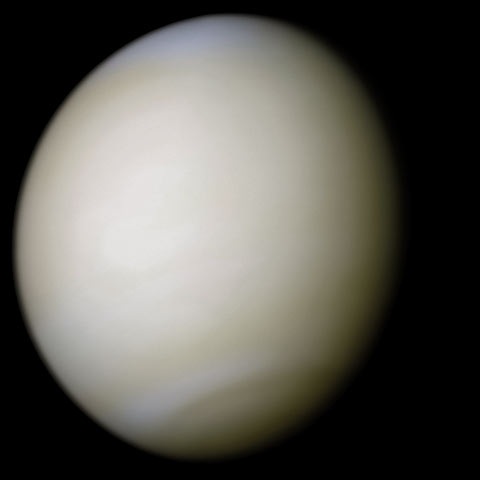
Venus spins slowly in the opposite direction from most planets. Its thick atmosphere traps heat in a runaway greenhouse effect, making it the hottest planet in our solar system.

  • Surface temperatures are hot enough to melt lead.
  • A day on Venus (243 Earth days) is longer than its year (225 Earth days).
Earth

EARTH

The Pale Blue Dot

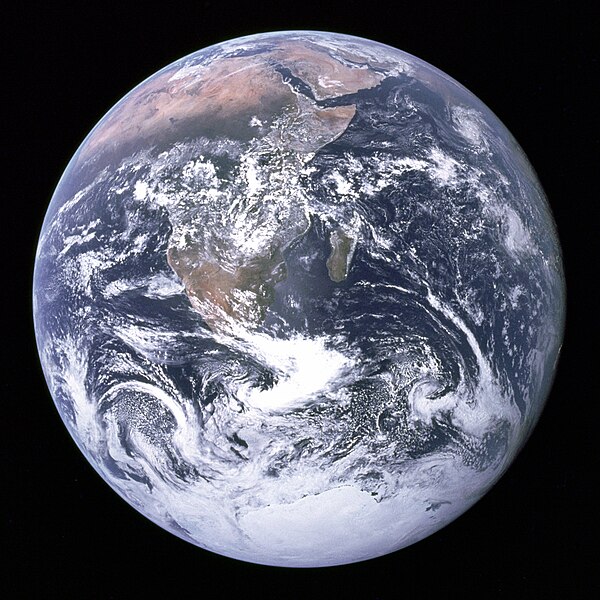
Our home planet is the only place we know of so far that's inhabited by living things. It's also the only planet in our solar system with liquid water on the surface.

  • Earth's atmosphere protects us from meteoroids and harmful radiation.
  • It is the densest planet in the Solar System.
Mars

MARS

The Red Planet

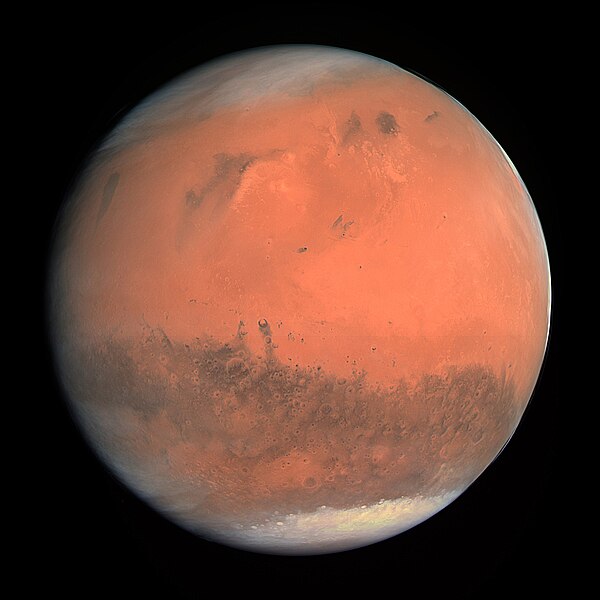
Mars is a dusty, cold, desert world with a very thin atmosphere. There is strong evidence that billions of years ago Mars was wetter and warmer, with a thick atmosphere.

  • Home to Olympus Mons, the tallest volcano in the solar system (3x Everest).
  • Mars has two small moons, Phobos and Deimos.
Jupiter

JUPITER

The King of Planets

Jupiter is more than twice as massive as all the other planets combined. The giant planet's Great Red Spot is a centuries-old storm bigger than Earth.

  • Jupiter has 95 officially recognized moons (as of 2023).
  • It has the shortest day in the solar system (only about 10 hours).
Saturn

SATURN

The Jewel of the System

Adorned with a dazzling, complex system of icy rings, Saturn is unique in our solar system. The other giant planets have rings, but none are as spectacular as Saturn's.

  • It is the least dense planet; it would float in a bathtub of water.
  • Its moon Titan is the only moon with a thick atmosphere.
Uranus

URANUS

The Ice Giant

Uranus creates a unique visual as it rotates on its side. It was the first planet found with the aid of a telescope, discovered in 1781 by astronomer William Herschel.

  • It is an "Ice Giant" composed mostly of flowing icy materials above a rocky core.
  • It rotates at a nearly 90-degree angle from the plane of its orbit.
Neptune

NEPTUNE

The Windy One

Dark, cold, and whipped by supersonic winds, ice giant Neptune is the eighth and most distant major planet orbiting our Sun. It is more than 30 times as far from the Sun as Earth.

  • Neptune was the first planet predicted by mathematics before it was observed.
  • Winds can reach up to 1,200 miles per hour (2,000 km/h).