AI-designed bacteriophages mark a new frontier for genome engineering
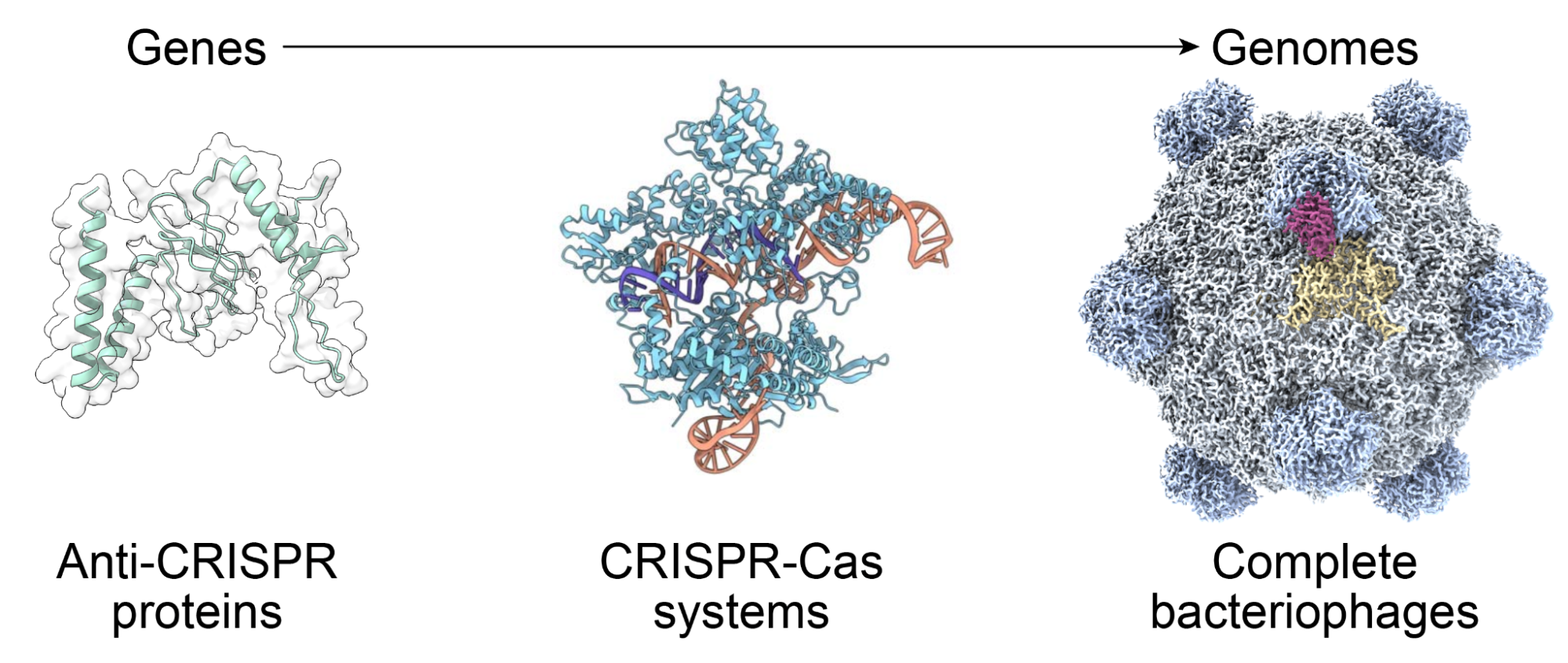
Researchers at Stanford University and the Arc Institute have used genome-language models to design complete bacteriophage genomes that worked in the laboratory. The paper, published in Science on August 6, describes a first for generative AI: not just predicting genes or proteins, but generating full viral genomes that worked in a bacterial host.
The team worked with ΦX174, a small bacteriophage that infects the non-pathogenic E. coli C strain. Its genome is only about 5,386 DNA letters long but contains 11 overlapping genes, making it a demanding test for an AI system. The researchers fine-tuned Evo models on 14,466 related phage sequences, generated thousands of candidates and filtered them for structure, likely function and host specificity. Of 302 candidates selected for synthesis, 285 could be assembled and tested. Sixteen produced viable phages.
The result is more than a computer simulation. Several of the AI-designed phages carried dozens to hundreds of mutations compared with known natural sequences, and some performed as well as or better than the natural template at infecting E. coli. In experiments with resistant bacterial strains, cocktails assembled from the generated phages overcame resistance that stopped the original ΦX174. That points to a possible future for phage therapy against antibiotic-resistant bacteria.
The safety boundary is equally important. These are bacteriophages, not viruses designed to infect people, and the researchers deliberately excluded human-infecting viruses from the training data. The experiments used non-pathogenic bacterial strains under containment. The paper’s publication nevertheless turns a long-discussed possibility into a demonstrated capability: AI can help write biological systems at genome scale.
That does not mean an AI system can create a human pathogen on demand. The genomes tested are small, the host range was constrained and most generated designs failed. But the work raises a governance question that is no longer hypothetical. Existing safety rules were built around familiar workflows. Genome models and cheaper synthesis could make the design space larger and faster.
For researchers and companies, the practical lesson is to treat biological AI as an engineering discipline with safety controls from the start. For everyone else, the news is a reminder that AI’s frontier is expanding beyond text, images and code. The useful promise is targeted treatment for resistant infections; the responsibility is to make sure the systems that design new biology are tested, monitored and governed as carefully as the biology itself.