Anthropic says Claude computes a nine-loop physics amplitude
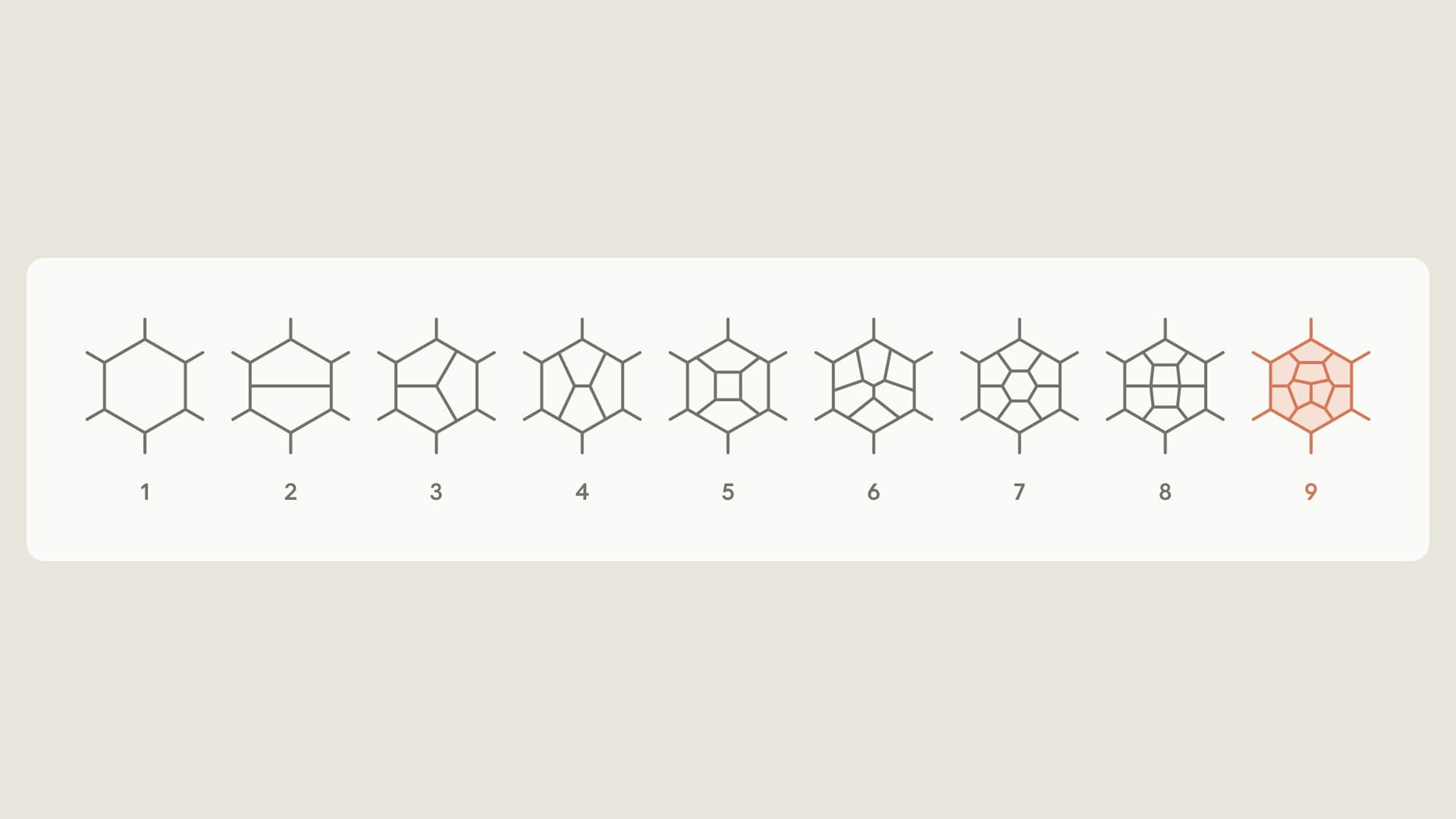
Anthropic says Claude has computed a nine-loop, six-particle scattering amplitude in planar N=4 super Yang-Mills, a simplified theory that physicists use to test calculation methods. The result was described in a September 25, 2026 guest post by physicist and science writer Matt von Hippel, with an addendum from Lance Dixon of SLAC National Accelerator Laboratory and Stanford University.
Scattering amplitudes are formulas that help physicists calculate how subatomic particles can interact. The N=4 theory is not a model of the real world; its useful feature is that its symmetries make difficult calculations more structured. Researchers use it as a testing ground for techniques that could eventually support more precise predictions for experiments. Dixon and Andy Liu had reached eight loops in related work in 2023, making the new nine-loop result a meaningful step within this specialist field.
Anthropic physicists Liam Fitzpatrick and Siddharth Mishra-Sharma used Fable 5.1 inside Claude Science, a research harness that combines Claude with structured prompts and tools. They asked the system to calculate the six-particle amplitude and told it to continue working while they were unavailable. According to the post, Claude completed the calculation through two routes: a direct bootstrap and an indirect form-factor approach. Anthropic estimates that either route would cost an end user roughly 1,000 to 2,000 dollars, while the bootstrap stage used about 100 dollars of compute across 96 CPUs for a week.
Dixon independently checked the result, including by comparing it with a related nine-loop form factor. A research group led by Song He at the Chinese Academy of Sciences also obtained most of the result with some GPT-6 assistance. Those checks matter: the announcement is not a claim that a chatbot discovered a new law of nature, and the calculation has not turned a simplified theory into a practical particle model.
For researchers and AI developers, the concrete lesson is narrower and more useful. A capable model, paired with a scientific harness and ordinary computing resources, can sustain a long symbolic and programming task with limited intervention. The work still depended on established human methods and expert validation. That makes the result relevant to scientific workflows, while also showing why reproducible files, independent checks and clear limits are essential when AI produces technical results.