Anthropic says Claude found a CRISPR-like enzyme system
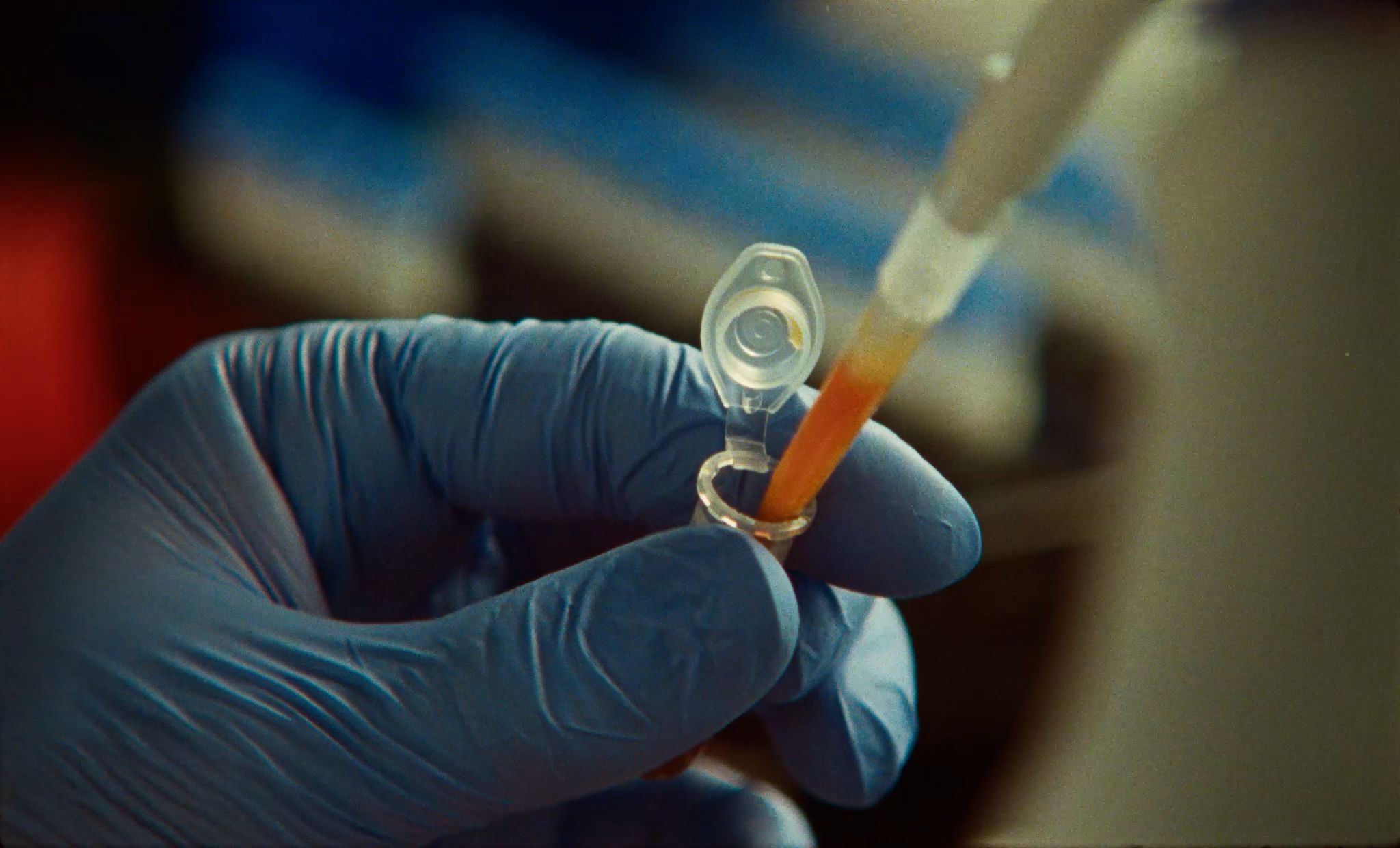
Anthropic says its Claude agents identified a previously uncharacterized enzyme system in bacteriophage DNA, bringing AI further into early-stage biological research. The company announced the result on September 23 as one of the first public findings from a life-sciences group and molecular-biology lab it formed in spring 2026.
Researchers gave the agents a high-level instruction to search DNA databases for interesting examples of reverse transcriptases, enzymes that copy RNA into DNA. Anthropic says roughly 950 agents worked for 21 hours and used 210 million tokens. They gathered more than 200,000 reverse transcriptases, selected 3,500 candidate systems and narrowed those to 20 detailed investigations. One search uncovered a pattern beside a reverse-transcriptase gene that had not been described as a system before.
Anthropic calls the finding array-associated reverse transcriptases, or ART. The system combines a reverse transcriptase, a neighbouring partner gene and a long array of evenly spaced DNA repeats, mainly in bacteriophages. Initial laboratory work found that the repeat array is expressed as distinct short RNAs. That architecture resembles the repeat arrays associated with CRISPR, which is why the comparison matters, but the similarity does not establish that ART can edit genes.
The important development is the workflow as much as the biological result. Claude agents searched a volume of sequence data that would be difficult for a small human team to inspect manually, noticed an unusual structure, compared it with known systems and prepared a report for review. Human scientists set the direction, assessed the candidates and performed the laboratory experiments. Anthropic says the lab works at biosafety levels 1 and 2 and does not handle pathogens that infect people.
There are significant limits. The primary function of ART is still unknown, the accompanying paper is a preprint rather than peer-reviewed research, and Anthropic has not shown a usable gene-editing tool or medical application. The result is therefore best read as an early demonstration of AI-assisted hypothesis generation and anomaly detection, not as a new CRISPR replacement.
For scientists and organisations, the case points to a practical shift: AI research tools are moving from literature summaries toward proposing and prioritising experiments. That makes audit trails, reproducibility, independent review and careful lab safety essential. The next question is not whether Claude can produce an impressive candidate, but whether researchers can repeatedly validate such candidates and discover what they actually do.