Archetype AI launches Newton Agents for industrial operations
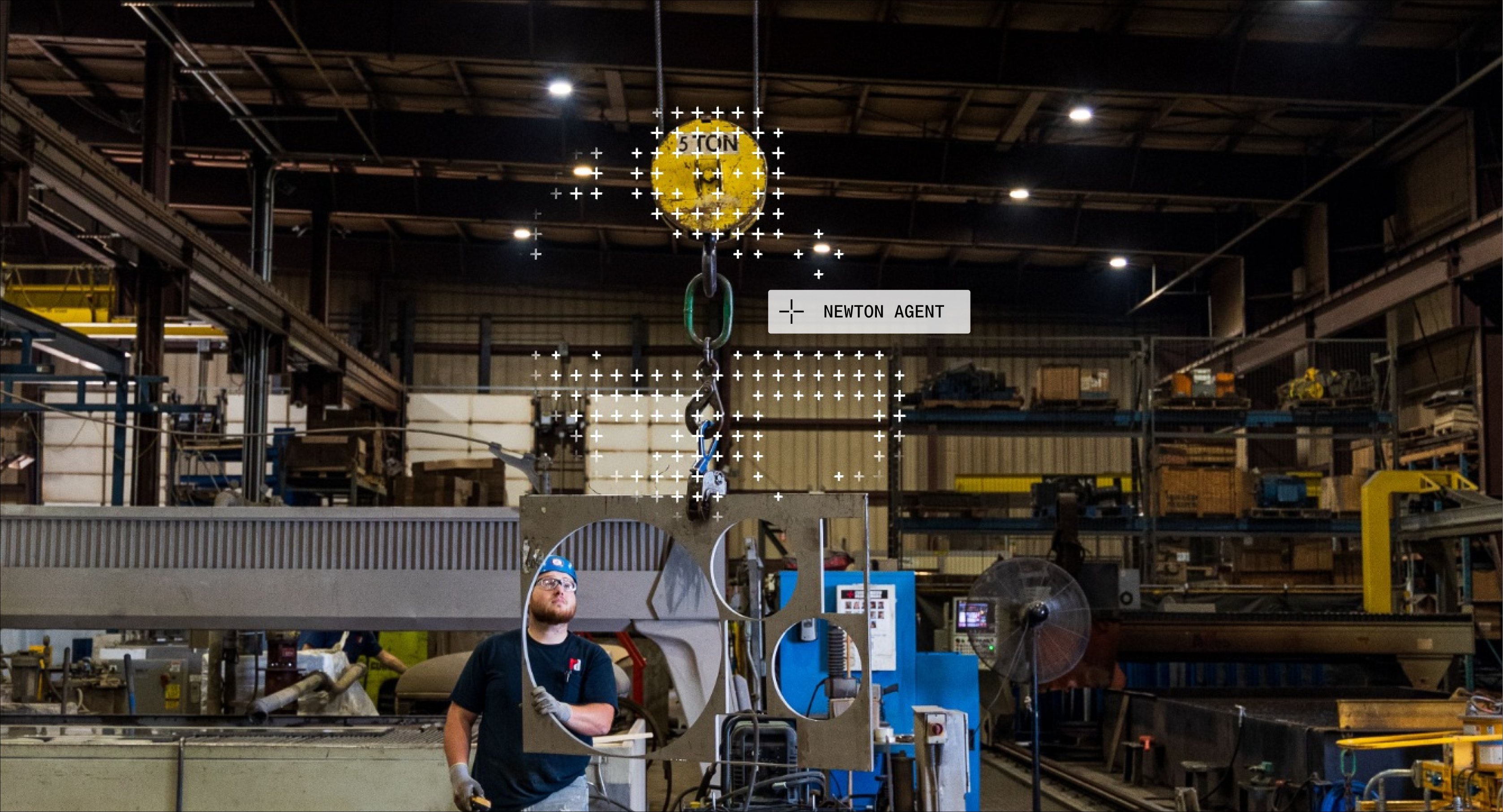
Archetype AI has introduced five prebuilt Newton Agents aimed at industrial operations. The company detailed the product suite on August 19, 2026. Instead of asking a manufacturer to train a separate AI model for every machine or workflow, the agents begin with Archetype's Newton physical world model and are adapted to an organization's equipment, sensor data and operating conditions.
The five agents cover Operational State Monitoring, Anomaly Discovery, Rare Event Detection, Task Verification and Manual Generation. In practical terms, they are designed to identify changing machine states, find unexpected behavior, recognize uncommon failures from a small number of examples, check whether physical work was completed correctly and turn expert demonstrations into instructions. Archetype says Newton can combine live or historical signals including vibration, temperature, pressure, electrical current, acoustics and video.
This is an important distinction from general-purpose chatbots. Newton Agents are intended to interpret patterns in physical systems rather than mainly documents or conversations. The company says each agent can be calibrated with examples and, when necessary, fine-tuned using proprietary operational data. Customers are still expected to define success criteria and compare results with ground truth before deployment. Claims about generalization and performance come from Archetype AI and have not been independently verified in the announcement.
Deployment is another central part of the release. Archetype says the agents can run in a public cloud, a private virtual cloud, on premises or at the edge. Multiple model sizes are available, including versions optimized for industrial edge hardware. That flexibility matters in factories and infrastructure where latency, limited connectivity, security requirements or data-sovereignty rules can make continuous cloud processing unsuitable.
For manufacturers and other operators, the promise is a shorter path from raw sensor streams to monitoring and decision support. Reusable agents could reduce the data engineering, labeling and model training required for each application. But deployment does not remove the need for human oversight. Missed faults and false alarms can have physical and financial consequences, so buyers will need site-specific evaluation, access controls and clear responsibility for decisions. The release shows how the agent trend is moving beyond office software into machines and industrial workflows, where reliability must be demonstrated in the environment in which the system will operate.