ChatGPT Work learns the writing style that makes your work sound like you
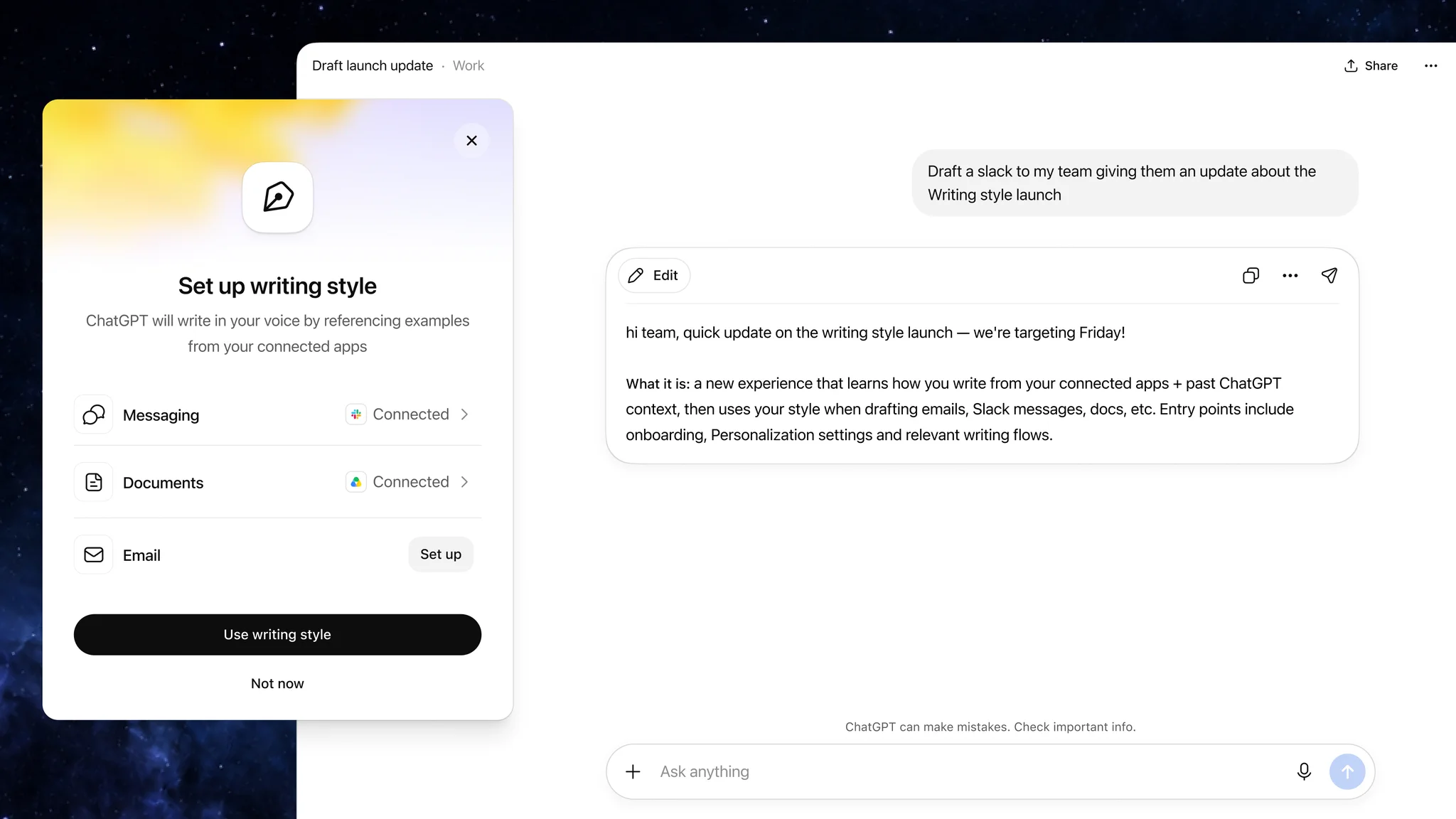
OpenAI says ChatGPT Work can now learn more about the way an individual writes. In a post from the official ChatGPT account on September 7, 2026, the company said the assistant can pick up on a user’s favourite phrases, a specific sign-off and even capitalization quirks. The announcement presents this as a new layer of personalization: the system is meant to recognise the patterns that make a draft feel like it came from a particular person.
The same post connects the writing feature to the tools people use at work. OpenAI names Gmail, Google Drive, Slack and SharePoint as examples of services that can be connected to ChatGPT Work. According to the announcement, that connected context helps the assistant learn how someone writes. The post does not publish a technical description of the underlying memory system, a complete list of supported plans or a measurement showing how consistently the feature reproduces a person’s voice.
That distinction matters. Remembering a preferred closing or recurring expression can make drafting email, reports and internal updates less repetitive. It may also reduce the amount of instruction a user has to repeat every time they ask for help. For a team, a more familiar first draft could make an AI assistant easier to adopt, especially when work already lives across email, documents and collaboration tools.
Personalization also changes the review task. A system that knows a user’s habits may produce text that sounds convincing while still getting facts, emphasis or intent wrong. A familiar tone is not proof that the content is accurate. Users should check names, numbers, commitments and confidential details before sending or sharing anything. They should also understand which connected sources contribute context and what controls exist for memory, permissions and retention.
For makers and businesses, the announcement signals that competition between workplace assistants is moving beyond generic fluency. The useful difference may be whether a system can work with approved context and adapt to the conventions of a real person or organisation. That could save editing time, but it raises governance questions about consent, data boundaries and authorship. OpenAI has announced the capability; teams will need to test its availability and behaviour in their own workflows before treating a personalised draft as ready for publication.