Gemini 3.8 Live with Live Avatar reaches general availability
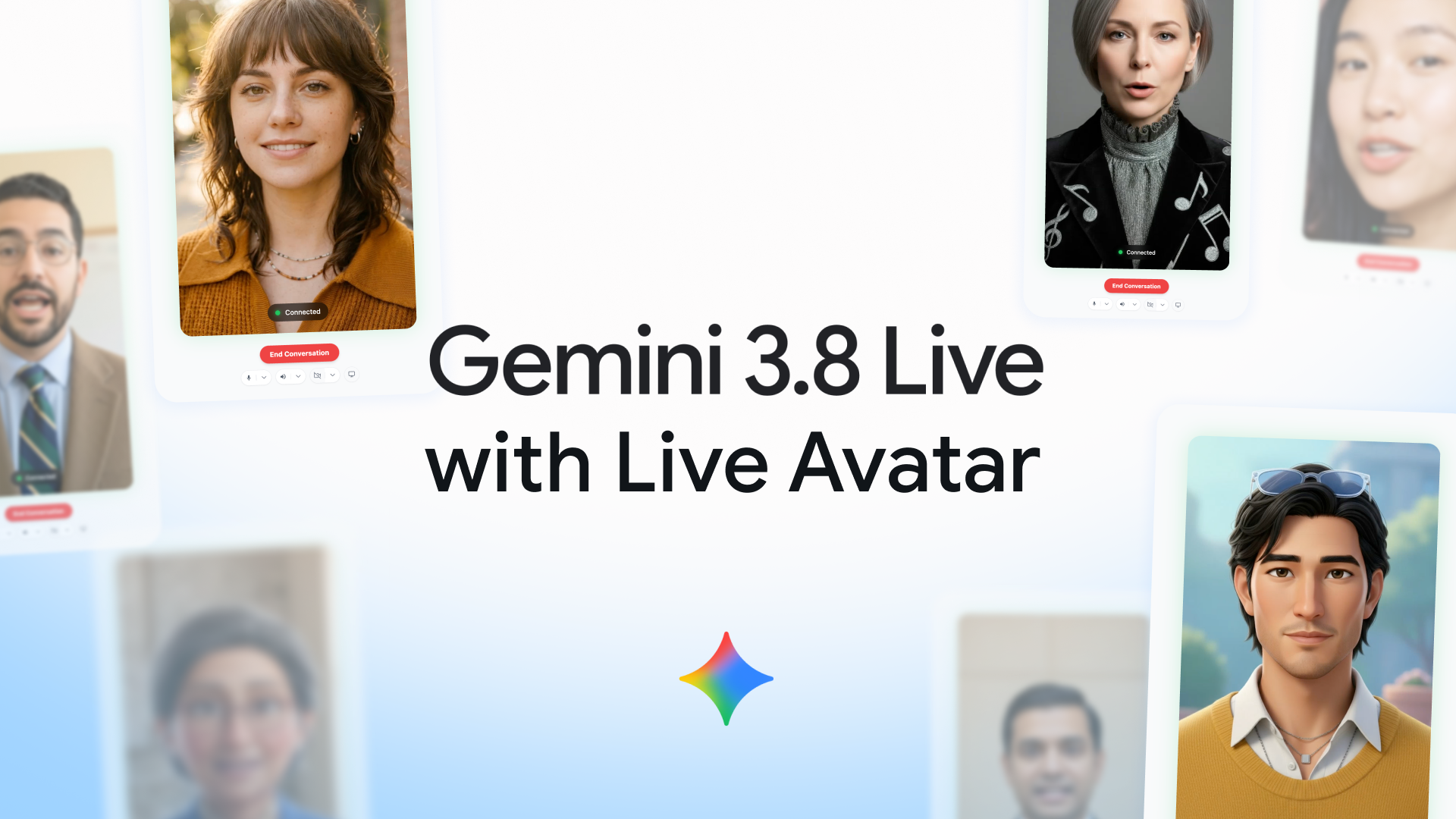
Google Cloud has made Gemini 3.8 Live with Live Avatar generally available in Gemini Enterprise. The company announced the release on 24 September 2026, describing it as the production follow-up to a preview shown at Google Cloud Next 2026. The announcement is separate from Gemini 3.8 Live Extended Thinking, which Google says remains in private preview.
The release combines real-time speech-to-speech conversation with a visual avatar that can produce synchronized lip movement. Google says the model is available through US and EU endpoints, with provisioned throughput, enterprise compliance and strict data-governance controls. Developers can also start building through the Gemini Live API. That makes the announcement relevant to teams moving from voice prototypes to customer-facing or internal applications, although access, pricing and deployment choices still depend on the Google Cloud setup.
Google highlights several capabilities. Gemini 3.8 Live can switch automatically across 97 supported languages during a conversation, execute API, CRM or ERP calls asynchronously while the agent continues speaking, and process live camera feeds or screen shares alongside audio. In practice, those features target interactions where an agent must listen, see context and act without leaving the user in silence while a backend operation completes. Google points to insurance claims intake, real-time voice agents and shopping assistance as examples.
The Live Avatar feature also introduces additional safeguards. Customers can choose from a library of curated pre-built avatars, while custom avatar creation is restricted to an allowlist and verification process. Google says generated audio and video streams include imperceptible SynthID watermarks. These controls do not remove the need for consent, access management or human review, especially when an avatar represents a business and can trigger external actions.
For AI users and makers, the important change is the move from a voice-only interface toward a multimodal, visibly embodied agent that can keep a conversation moving while tools run in the background. That could improve service, accessibility and kiosk experiences, but it also raises expectations around latency, disclosure and safe automation. The general-availability label signals production readiness within Google’s enterprise offering; it is not an independent guarantee that every application will deliver the same quality or reliability.