Google AI Edge Foresight brings an offline meeting assistant to Mac
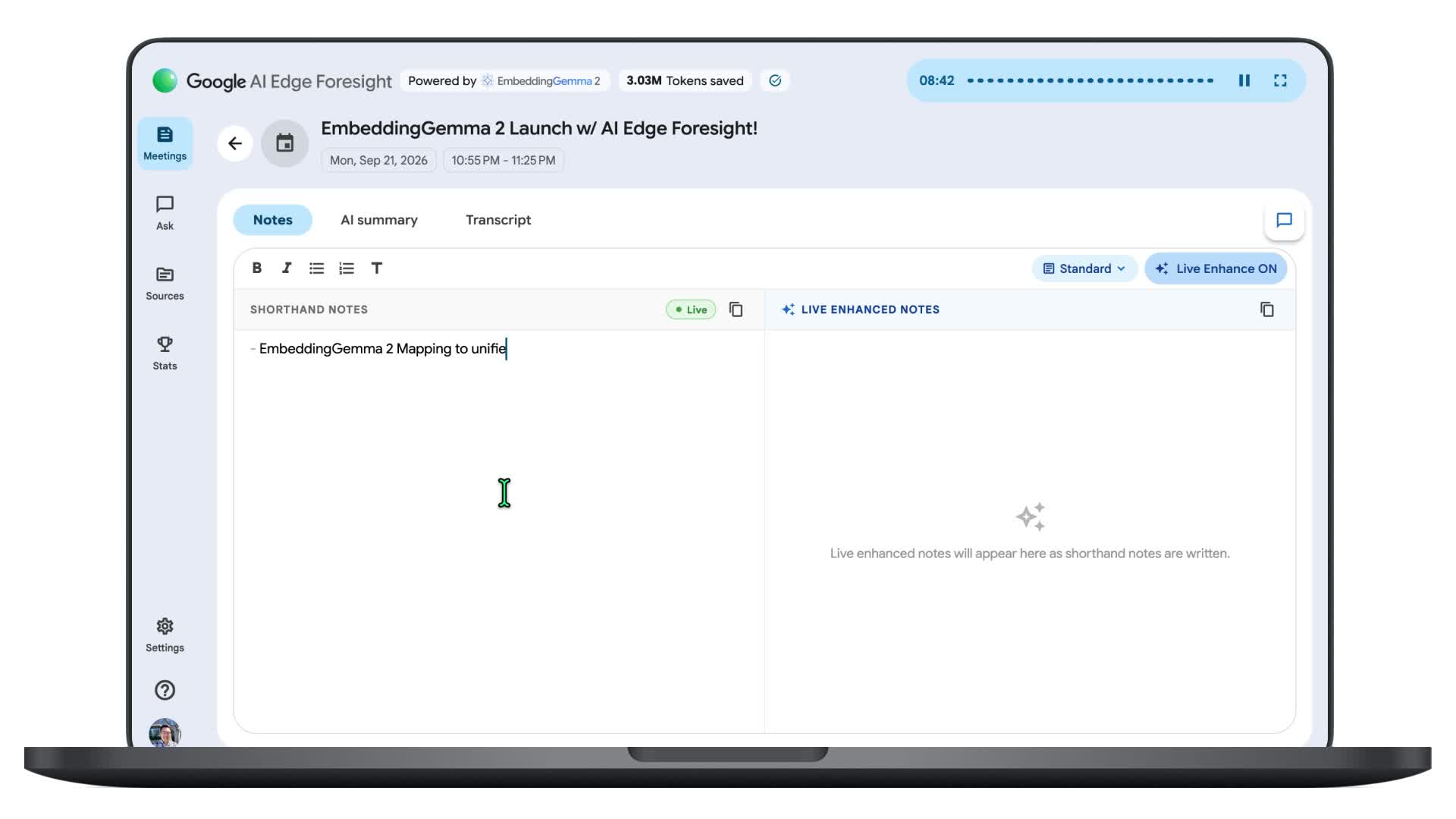
Google introduced AI Edge Foresight for Mac on October 6, describing it as an experimental meeting companion that processes information on the computer. The app listens to system audio and the microphone, so Google says it can work with different meeting platforms and continue functioning offline. It is designed to turn brief shorthand notes into fuller meeting notes and help users find information across conversations and personal files.
Foresight combines two Google models. EmbeddingGemma 2 creates a shared representation of text, audio and visual material, which the app uses to index and retrieve relevant context. Gemma 4 generates and organizes the resulting notes and answers. During a meeting, Foresight can use the live conversation to enrich a user’s notes, surface information from indexed sources and respond to questions. Google’s demonstration shows separate areas for notes, summaries and transcripts, alongside controls for live enhancement.
Users can point the app to project folders and reference material, including documents and diagrams. Google also describes retrieval across a personal knowledge library, so a meeting question can be connected to material stored outside the current conversation. The company says processing stays on the device; that can reduce dependence on network access and avoid sending meeting audio to a cloud service. It does not remove the need to secure the Mac, control access to indexed files or follow workplace rules for recording and consent.
The launch matters because meeting assistants usually depend on cloud services, while Foresight presents local processing as a way to combine transcripts with private work context. That may appeal to people handling sensitive projects or working with unreliable connectivity. For businesses, the practical question is whether local retrieval and note enhancement are accurate and manageable across real meetings, file permissions and different Macs. Google has called Foresight experimental, and its product page does not publish independent accuracy, privacy or performance evaluations. Users should review generated notes and answers before relying on them. The release is also part of Google’s wider effort to put its AI Edge models into usable applications, rather than offering them only as developer components.