Google brings Gemini Personal Intelligence to cars
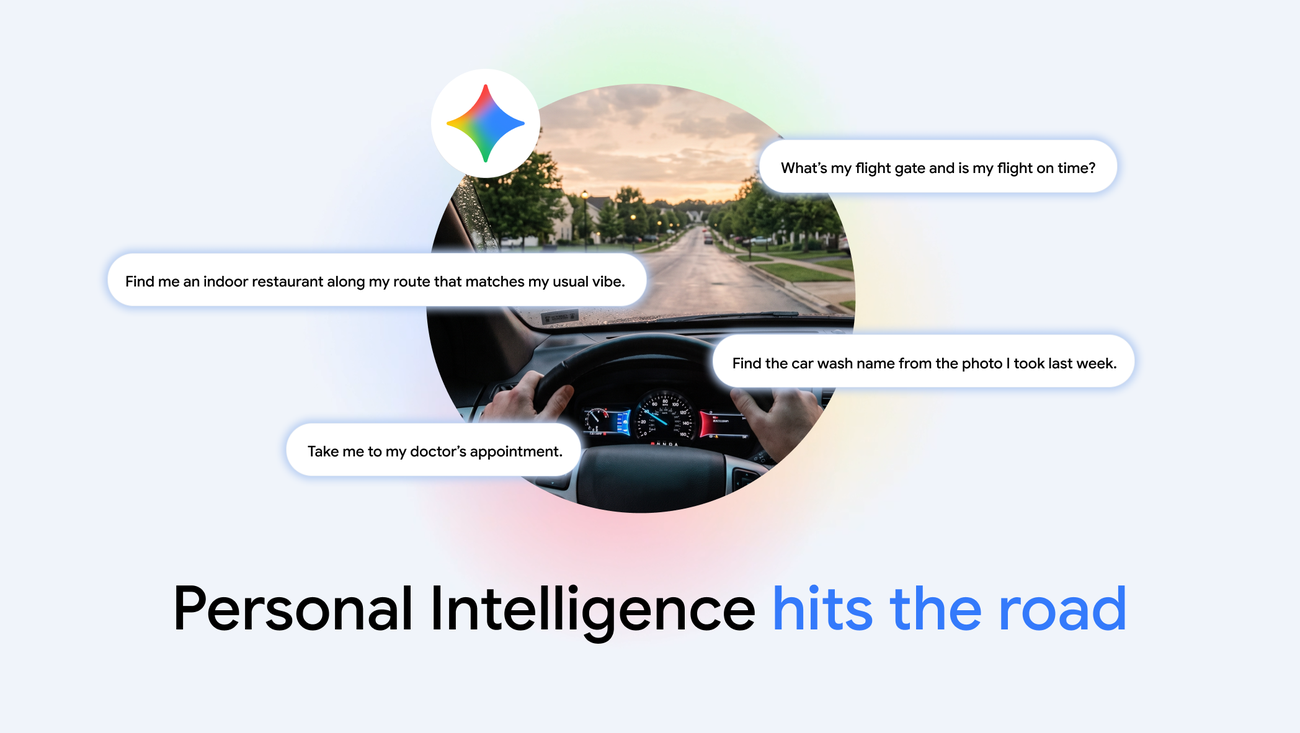
Google announced on October 20, 2026 that Gemini is coming to Android Auto and to cars with Google built-in. The new part is Personal Intelligence: with a user's permission, Gemini can draw on information from Google apps the person already uses, including Gmail and Calendar through Workspace, Photos, Maps, YouTube and Search. The assistant can then answer questions that require several pieces of personal context while the driver keeps their hands on the wheel.
Google's examples are deliberately practical. A driver could ask for a flight gate and whether the flight is delayed, find an indoor restaurant along a route that fits a known preference, navigate to a doctor's appointment from a calendar entry or identify a car wash from a photo taken earlier. The feature is not just a new voice interface; it connects a car conversation with a user's existing data and can carry context from one interaction to another.
The rollout begins on Android Auto, with cars using Google built-in expected to receive it in the following months. Personal Intelligence is optional: apps are not connected until the user enables the setting, and the connection can be turned off in Gemini. Google says a car with Google built-in only provides personal responses when a phone is connected. The footnote is important for readers in Europe: the current rollout is for eligible personal Google accounts held by people aged 18 or older, excludes Workspace business, enterprise and education users, and does not include the European Economic Area, Switzerland, the United Kingdom or Nigeria.
Independent coverage from TechCrunch, Ars Technica and Android Central confirms the rollout and highlights the trade-off. Personal context can reduce the need to search through several apps, but it also gives an in-car assistant access to information about travel, messages, locations and habits. Ars specifically advises users to review connected-app settings rather than assuming that a useful answer requires broad access.
For drivers, the update makes Gemini more useful in an everyday environment where speaking is safer than touching a screen. For AI makers and automakers, it shows how assistants are moving from isolated chat windows into products that combine voice, personal data and actions. The convenience depends on clear permissions, regional availability and reliable answers; a tailored response is still not proof that the underlying information or recommendation is correct.