Google launches Gemini Omni 1.2 Flash for 15-second video creation
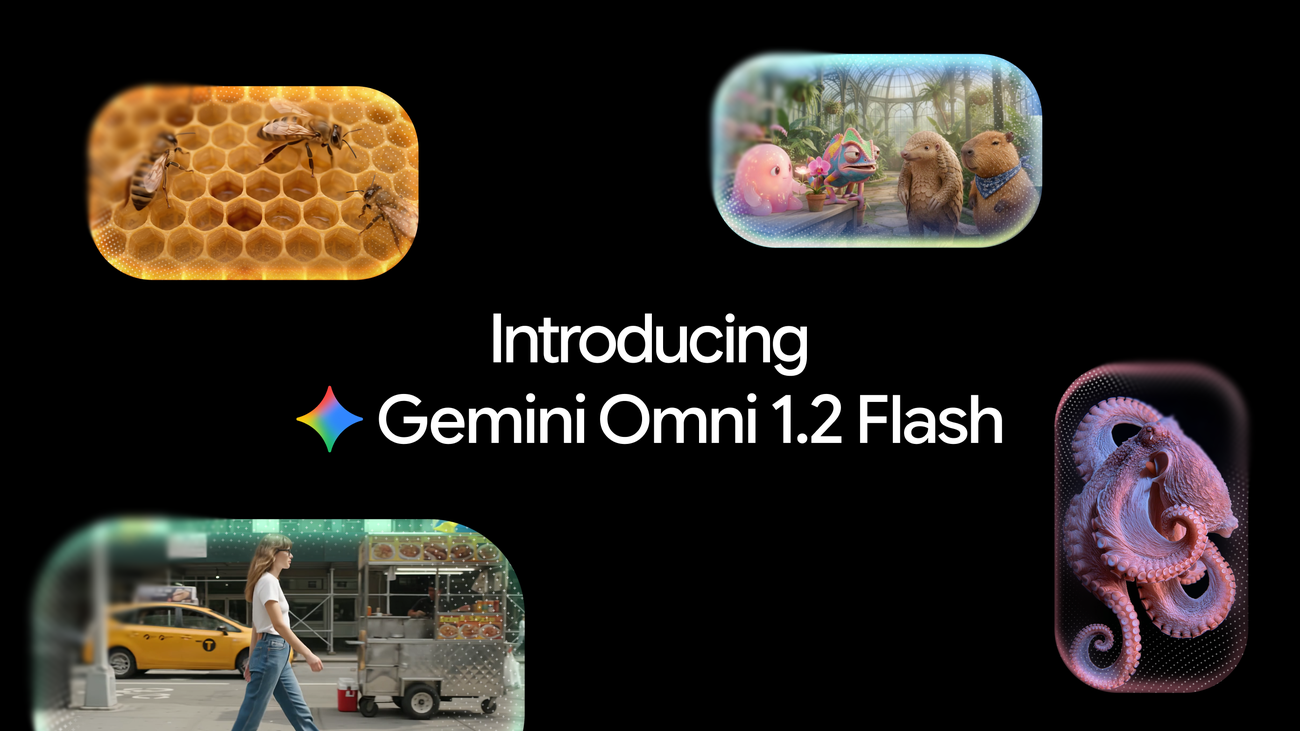
Google has launched Gemini Omni 1.2 Flash, a video generation and editing model that can create clips of up to 15 seconds. The announcement was published on 5 November 2026 by Anish Nangia, a product manager at Google DeepMind. Google says the model is generally available through the Gemini API and Gemini for business, with a rollout across several of its products and developer platforms.
The update extends the maximum native clip length from 10 seconds in Omni 1.1 to 15 seconds in the new version. Users can choose durations in one-second steps from three to 15 seconds. Google also says the model supports multi-turn conversational editing. Instead of starting again, a creator can ask for a change to a generated clip, such as a different product, background, lighting setup or aspect ratio.
Cost is another part of the release. Google says 720p video generation costs $0.07 per second, 30 percent less than Gemini Omni 1.1. The company suggests drafting at 360p or 720p, refining a promising result, and upscaling selected clips to 1080p or 4K. These are Google’s published pricing and workflow claims; actual project costs will also depend on inputs, edits, output choices and the service used.
The model is designed to follow reference material more closely. Google describes combining character, product or style images with short motion clips and audio cues. It says faces, packaging, clothing, brand colours and scenes should remain more consistent across camera movements and transitions. The release also highlights more natural dialogue, multi-speaker conditioning, lip-sync and complex continuous camera moves. Google notes that work remains on difficult cases such as fast sports action, rapid script changes and complex physics.
For creators, the practical change is a more complete production loop: generate a longer draft, correct a detail through conversation and reserve higher resolutions for the final selection. For companies, that could make product explainers, catalogue videos and advertising variants cheaper to test. It does not remove the need for rights checks, human review or brand approval. Google says the model is backed by its enterprise infrastructure and that outputs carry an imperceptible SynthID watermark. The significance is therefore less a promise of fully automatic filmmaking than a lower-cost, more controllable video workflow from a major platform provider.