Google Maps turns Ask Maps into an agent for food and travel
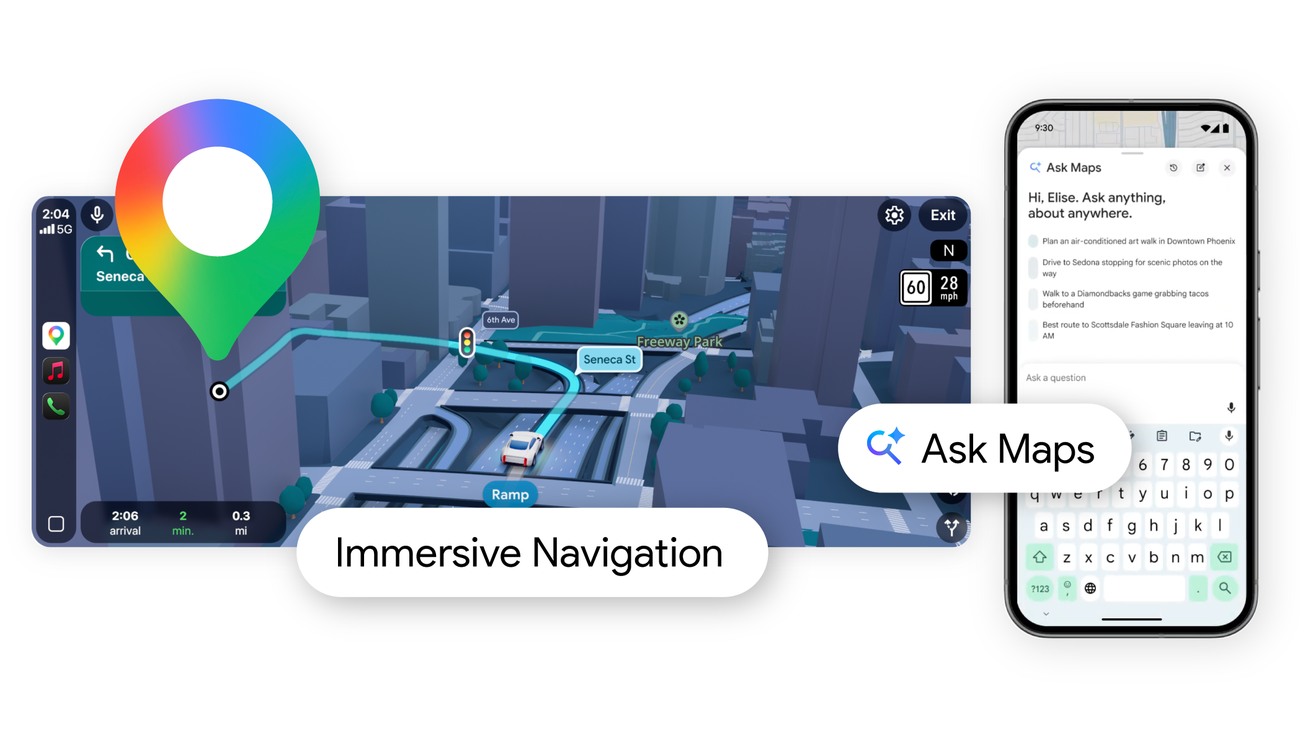
Google is turning Maps from a place-discovery tool into a service that can carry out parts of a trip. On August 6, the company announced new agentic capabilities for Ask Maps, the Gemini-powered conversational feature it introduced in March. TechCrunch reported the update at 5:30 a.m. Pacific time, or 14:30 in the Netherlands.
The most visible change is food ordering. A user can ask for a nearby meal in natural language, including dietary preferences and location. After choosing a restaurant, Ask Maps can fill a cart through supported services such as Square, Toast or Uber Eats. The customer still reviews the order and pays on the partner platform. This is an important boundary: Google is automating search and preparation, not silently spending money on a user's behalf.
Ask Maps can also compare hotel prices and availability for a trip. It can use criteria such as distance, ratings, atmosphere and nearby places, then send the user to a partner website to complete the booking. The update adds links to event tickets as well. The features are rolling out in the United States, while some supporting changes, including Personal Intelligence and a live transit widget, are expanding more broadly.
Personal Intelligence gives Ask Maps access to relevant information in Gmail and Google Calendar, such as upcoming flights, reservations and hotel details. Google says the setting is off by default. That choice matters because the product is moving from public map data into personal context. Users will need to understand what they are sharing, when it is used and how to turn it off.
For consumers, the benefit is less app-hopping: one question can connect discovery, comparison and the first steps of a transaction. For restaurants, hotels and ticket platforms, the change could move customer attention and referral traffic inside an AI interface. Their listings, prices, availability and partner integrations become part of the answer layer, which raises questions about visibility, fees and errors.
The broader market signal is clear. Google is trying to make Gemini useful by embedding it in a service people already use, rather than asking users to adopt another standalone chatbot. The rollout is still limited and the human remains in the loop for payment and booking. But the direction is significant: everyday AI is shifting from recommending the next action to preparing it, with trust, data controls and accountability becoming just as important as model quality.