Google adds TikTok-style AI clips to NotebookLM
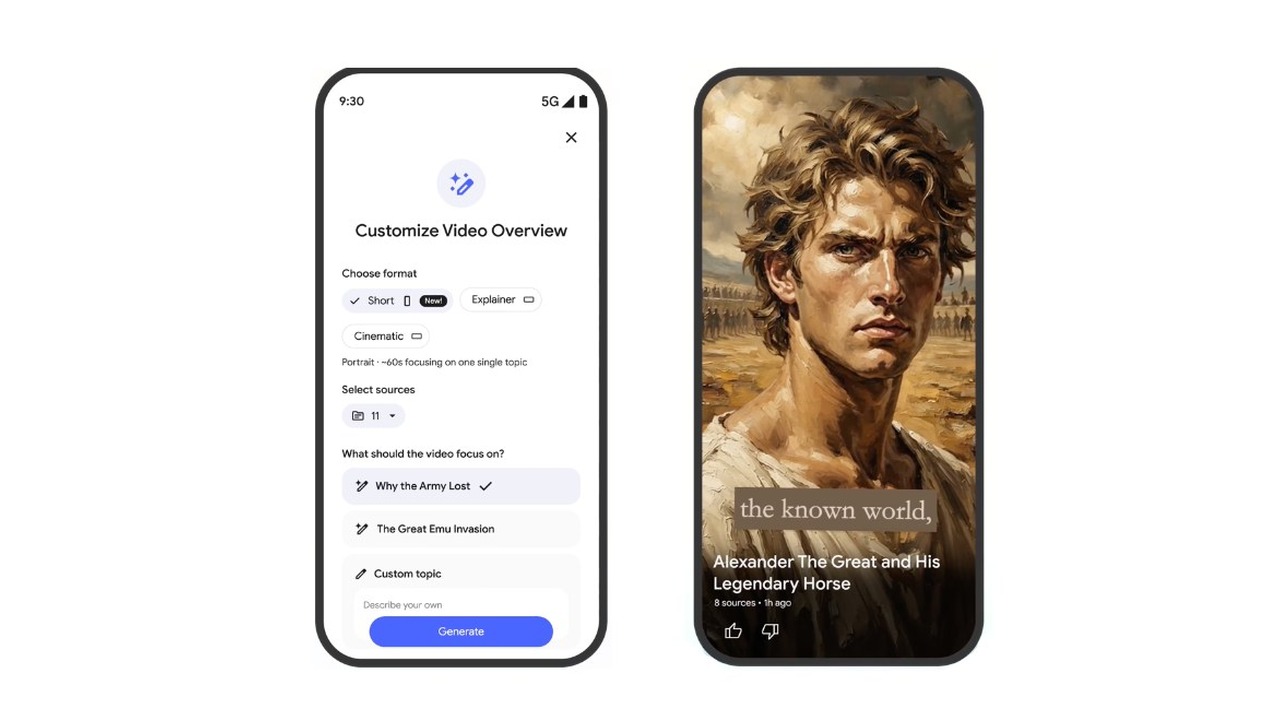
Google is giving NotebookLM a new short-form video mode. The Verge reported on June 30, 2026, that Google's research assistant can now generate 60-second vertical AI clips from the sources a user has uploaded to a notebook. The feature is rolling out first to Google AI Ultra and Pro subscribers, with support for free users planned later.
The idea is simple: instead of asking NotebookLM for a text summary, an Audio Overview or a longer Video Overview, a user can ask for a short clip that explains a chosen topic. In the NotebookLM web app or mobile app, the user opens a notebook, goes to the Studio panel, selects Video, chooses Short, picks or writes a focus topic and then generates the clip. Google's example, shared publicly and cited by The Verge, turns material about Australia's failed war on emus into a narrated vertical video with paper-cutout-style AI imagery.
This matters because NotebookLM is no longer just a tool for reading and summarizing sources. Google is turning it into a media generator for research. The same notebook can now produce podcasts, cinematic video, visual explainers and short social-style clips. That makes the product more useful for students, teachers, analysts, trainers and teams that need to turn complex material into something easier to share.
There is also a clear market signal. AI products are moving from answer boxes toward format engines. The value is not only that a model understands your documents, but that it can package that understanding as audio, video, slides, summaries or study material depending on the audience.
The risk is compression. A 60-second clip can make research feel approachable, but it can also flatten uncertainty, skip nuance and make generated visuals feel more authoritative than the underlying sources deserve. For AI users, the practical rule remains the same: use these clips as a first layer of explanation, not as a replacement for checking the sources. For creators and educators, however, this is a notable step. Google is making AI-generated learning media a standard output of knowledge work, not a separate production process.