Meta introduces Spaces for personal tools in Muse
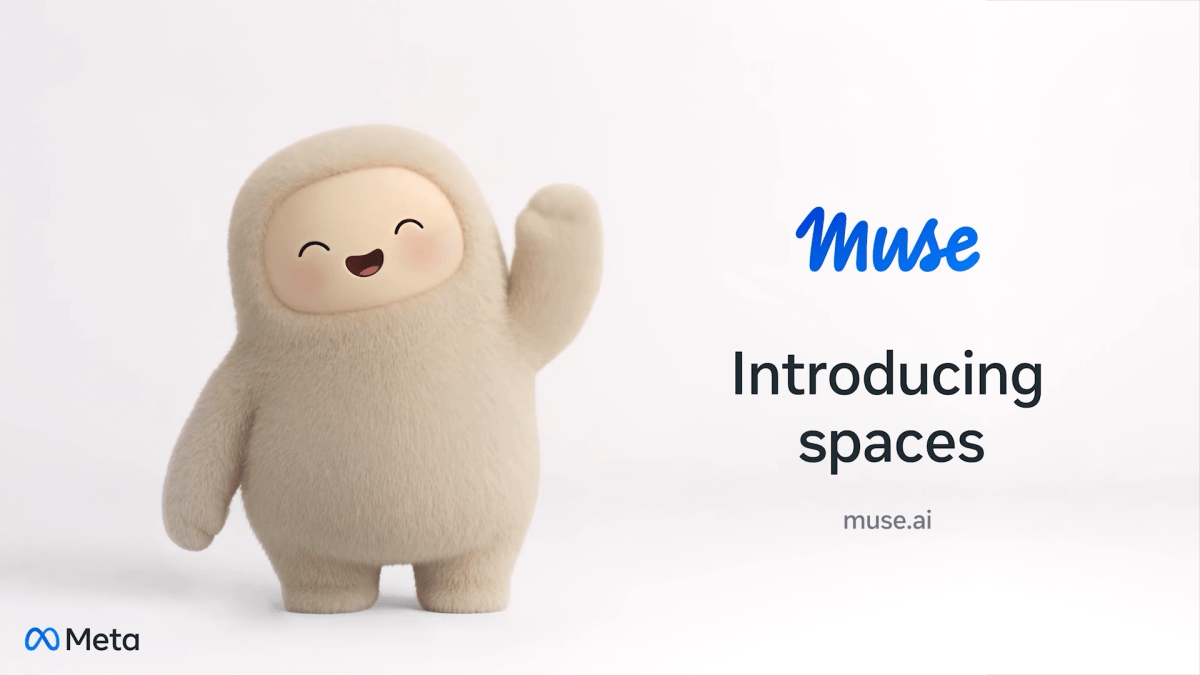
Meta introduced Spaces on 6 November 2026, letting Muse users create personal planners, trackers and other interactive tools by describing what they want in a conversation. The company says the feature is available wherever Muse is already available. It adds a way to turn an idea into a persistent part of the assistant, with an interface people can revisit and change.
A space begins with an instruction to Muse. Users can then ask for additional elements, a different appearance or changes to how it works. Meta gives examples ranging from a holiday gift tracker and a daily word game to a board for a home improvement project. The result stays inside Muse instead of disappearing into a long conversation history.
People can also decide how these tools fit into the app. Spaces can appear in the sidebar or main tabs, remain hidden until needed, or appear according to a schedule. A weekly planner could be prominent on workdays and give way to weekend plans on Saturday. Users can check off items, add notes and edit information directly within a space.
Connections to other apps are central to the feature. According to Meta, spaces can refresh information in the background, bringing in changes such as concert dates or prices without a separate request each time. The company's business examples include tracking orders and shipments or keeping freelance projects, deadlines and invoices together. Personal examples include travel itineraries and wedding planning. These are announced capabilities, rather than independent evidence of reliable performance across every connected service.
For everyday users, the potential benefit is less repeated work: an assistant could maintain a useful view of an ongoing task instead of producing another answer to copy into a spreadsheet. For small businesses and creators, it could make simple operational tools easier to assemble. The practical test is whether those tools remain accurate and useful as information changes.
The release currently centres on individual use. Meta says it is exploring sharing and collaboration, without announcing a launch date for those capabilities. It also says specialised models trained with lessons from Muse Wonder are being rolled out to Muse. The immediate news is the new interface users can build around their own routines, with background updates and direct editing inside the existing app.