NVIDIA adds a 64GB DGX Spark for local AI agents
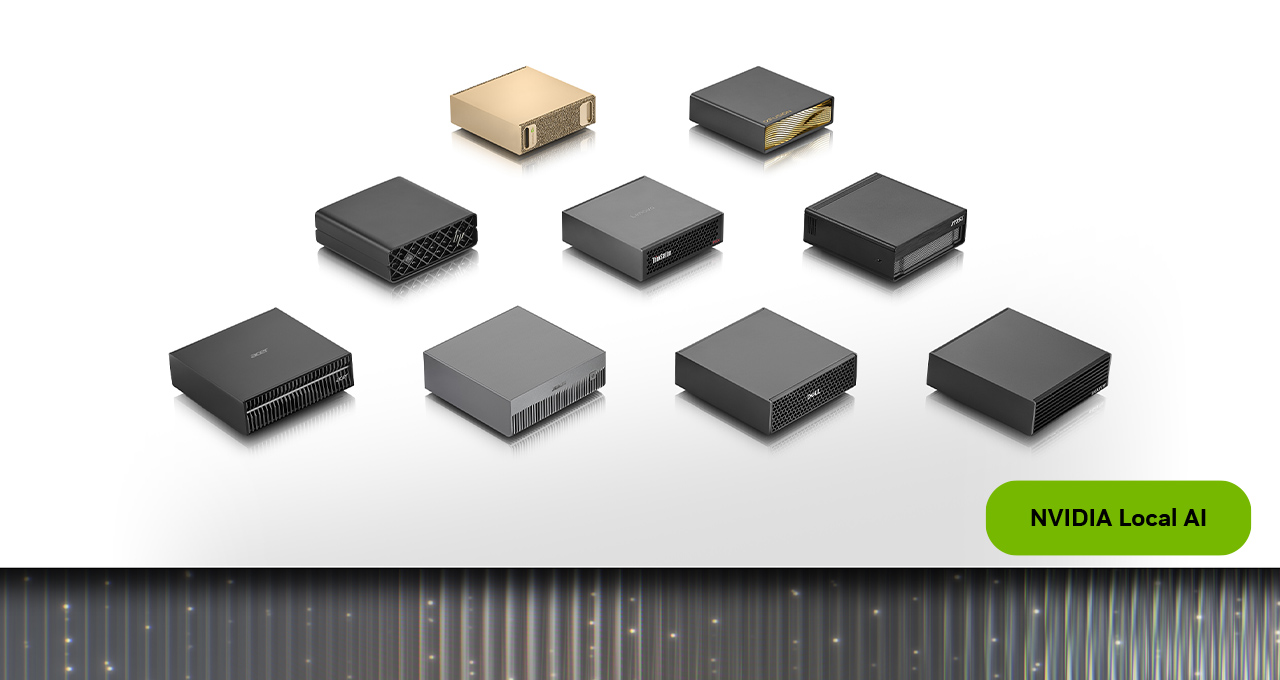
NVIDIA announced a 64GB version of its DGX Spark personal AI computer on October 2, 2026. The new configuration is scheduled to go on sale from Acer, ASUS, Dell, Gigabyte, HP and MSI on October 23, starting at $4,999. It is not a new chip: the system keeps NVIDIA’s GB10 Grace Blackwell processor, DGX OS and the company’s local AI software stack. The change lowers the memory capacity and price compared with the 128GB model, while opening another entry point for developers and researchers who want to run models close to their own data.
NVIDIA says the 64GB machine can run models with up to 100 billion parameters on the device. Its examples include coding agents, document analysis, inference, fine-tuning and edge development. The company also introduces a simpler way to combine two units. NVIDIA Sync Cluster Assistant detects the connected systems, configures their ConnectX-7 network and pools their memory to 128GB. In a Qwen 3.8 27B test, NVIDIA reports up to 1.7 times the performance of one system. These are NVIDIA’s measurements and should not be treated as independent guarantees for every model or workload.
The platform supports NVIDIA’s Agent Toolkit, CUDA-X AI libraries, Nemotron models and common runtimes such as Ollama, vLLM and PyTorch with CUDA. NVIDIA says developers can run local agents without sending every request to a cloud service, and Blender is preparing a downloadable installer. The company is also planning a model launcher for Qwen3.8 27B and OpenCode later in October.
The announcement is relevant because local AI is becoming a practical alternative for teams that need more control over data, latency or recurring inference costs. The price still makes DGX Spark specialist hardware rather than an ordinary consumer computer. The Register’s independent report notes that the 64GB version is more suitable for local inference than for some memory-intensive fine-tuning tasks, despite NVIDIA’s broader capability claims.
For makers and businesses, the choice is therefore about trade-offs rather than a simple cloud replacement. A local machine can keep selected documents and prompts on site, but it still needs access controls, updates and monitoring. NVIDIA’s launch shows that desktop AI is moving from a demonstration category toward configurable infrastructure, while the cost and workload limits remain important parts of the decision.