Nvidia launches PAIR to link idle home computers for local AI
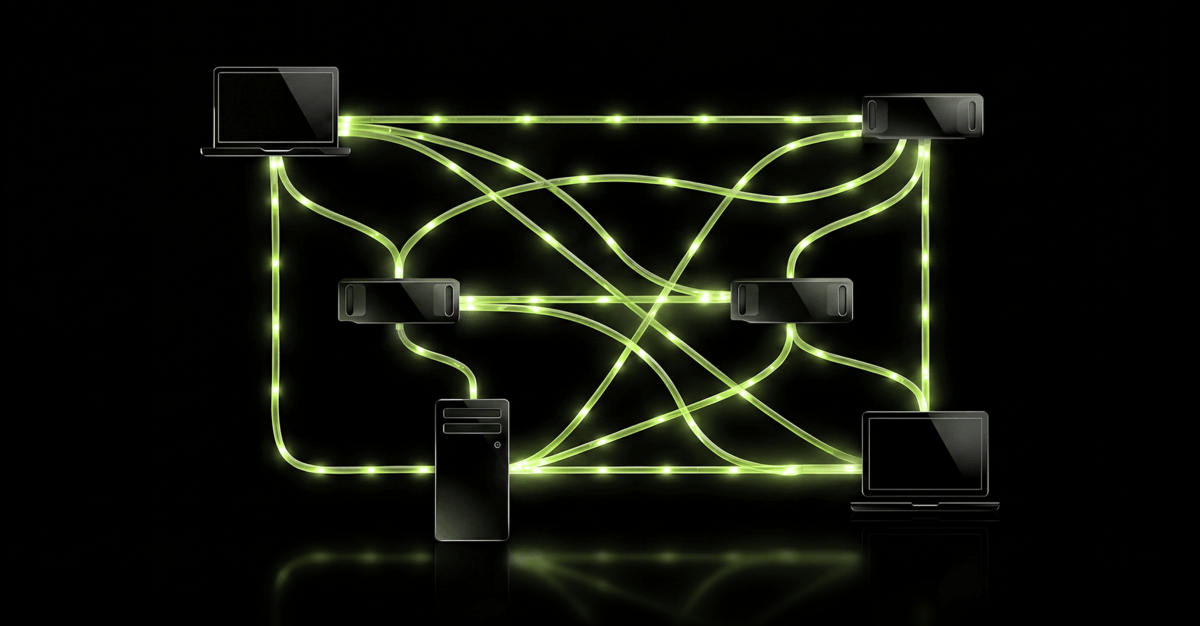
Nvidia is launching Personal AI Router, or PAIR, a free software tool that connects compatible computers on a home network for local AI inference. The announcement was reported by The Verge on September 3, 2026, and Nvidia’s own PAIR page describes the beta as a local endpoint for routing inference across RTX systems, DGX Spark machines and newer Macs. Despite its name, PAIR is not a network hardware router. It is open-source software that discovers participating computers and coordinates their available compute.
The tool is designed for devices that are not busy. Nvidia says PAIR can use idle capacity, distribute processing requests in parallel and adapt when a computer joins or leaves the network. That could help an agentic workflow split a larger job into smaller tasks instead of waiting for one GPU to handle everything. The practical result depends on the hardware, the local network and the way an application divides its work; PAIR does not turn several machines into one virtual GPU.
Supported hardware includes GeForce RTX 20-series cards and newer, RTX Pro GPUs and DGX Spark systems. Apple M4 chips or newer are also supported. The beta supports Windows, Linux and macOS, and works with local inference tools such as Ollama and LM Studio. Nvidia also says that Perplexity Portable Computer, Hermes Agent and OpenClaw are adding simpler local setup experiences for Nvidia GPUs on Windows.
Nvidia says devices are paired with a six-digit code and communicate over mutual Transport Layer Security, or mTLS. That creates an encrypted channel with authentication in both directions, but users should still understand which computers they are adding to a cluster and what software is running on them. Local processing can reduce reliance on cloud inference, yet it does not remove the need to review permissions, logs and model behaviour.
For AI users and makers, PAIR is notable because it treats a collection of existing household computers as a small local inference cluster. A realistic setup may be a gaming PC working alongside a MacBook or Windows laptop, according to Nvidia’s product manager Seth Schneider. The idea could make local agents more usable for people who already own capable hardware, while also giving developers another deployment target. It is a beta, however, and Nvidia’s claims about performance, privacy and compatibility should be tested on the specific devices and workloads a user intends to run.