OpenAI brings collaborative Slides to ChatGPT Work
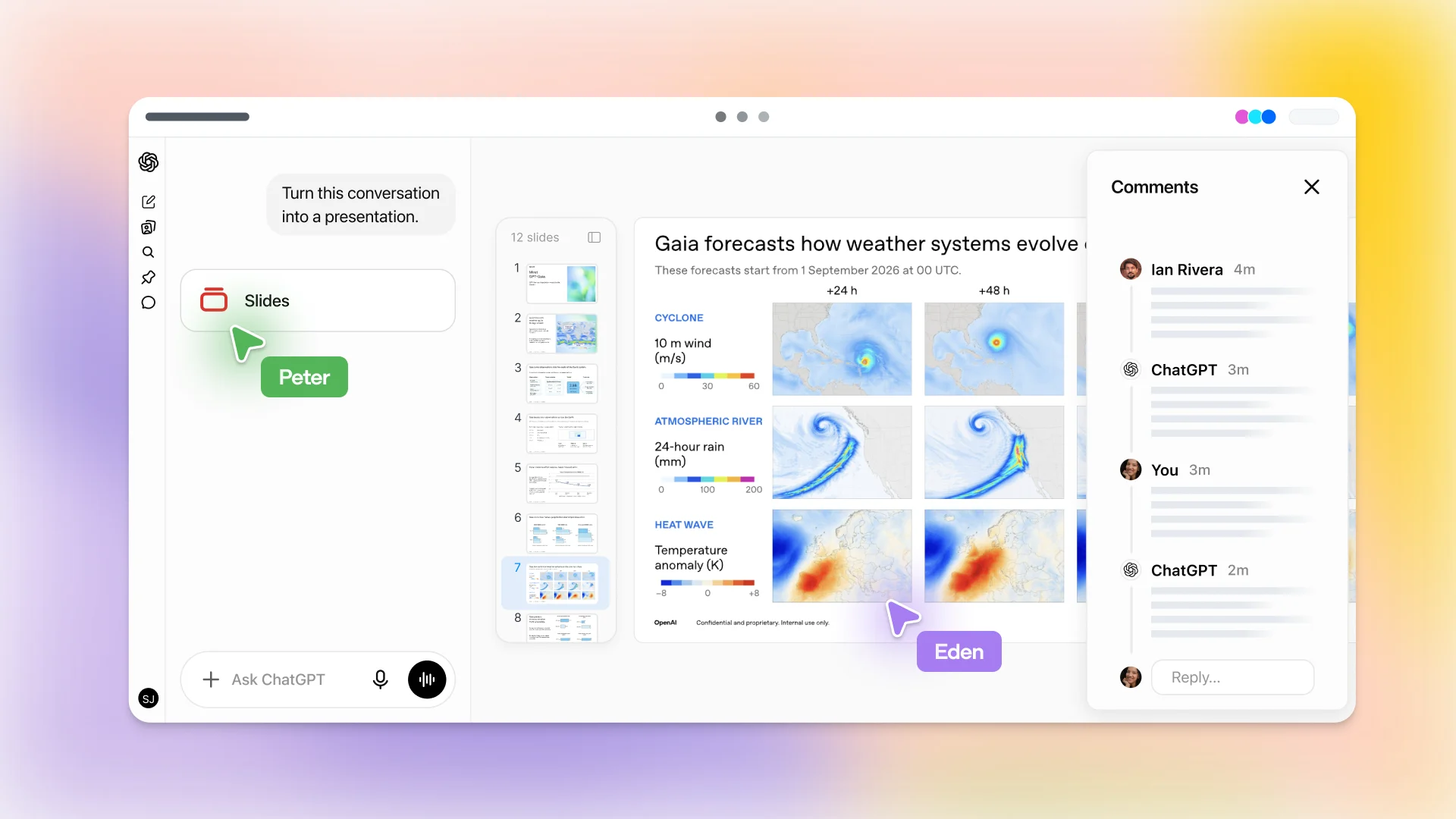
OpenAI is rolling out ChatGPT Slides, a presentation workspace that lets people create, edit and share decks alongside ChatGPT. The feature is described in an updated OpenAI Help Center article and is available to eligible Pro, Business and Enterprise users with access to Space. It is still a rollout, so an account may not see it yet.
Users can start from a Work conversation, uploaded files or an outline. They can also begin in Space with a blank slide or a template, and provide an example deck to guide the visual style. ChatGPT then creates an editable presentation rather than only returning a text outline. That distinction matters for people who normally move between a chatbot and presentation software.
The deck remains editable after creation. OpenAI says users can change text, images, shapes, tables and charts directly, or select an element and ask ChatGPT to revise it. Teammates with edit access can work in the same presentation at the same time, leave shared comments and mention ChatGPT or a personal dot when they want help with a change. Comment-only access is not available at launch.
Presentations can be shown directly from ChatGPT. On the web, users can export them to PowerPoint, PDF or Google Slides, so the feature does not require a team to abandon the tools it already uses. OpenAI nevertheless advises reviewing the text, figures, layout and formatting before a deck is shared or presented. The platform can make mistakes, and a polished visual does not prove that its claims or calculations are correct.
The broader significance is strategic. ChatGPT is moving from generating material for a person to providing a shared workspace where people and an AI can shape a finished work product together. That brings OpenAI closer to office suites and collaboration tools used for sales, research, internal updates and client work. For businesses, the practical questions are who can access a Space, what source files are included, how edits are approved and where sensitive presentations are stored. Slides can shorten the path from notes to a first draft, but human review remains essential for facts, brand standards and consequential decisions.