Personalized physical therapy: Stroke rehabilitation powered by AI
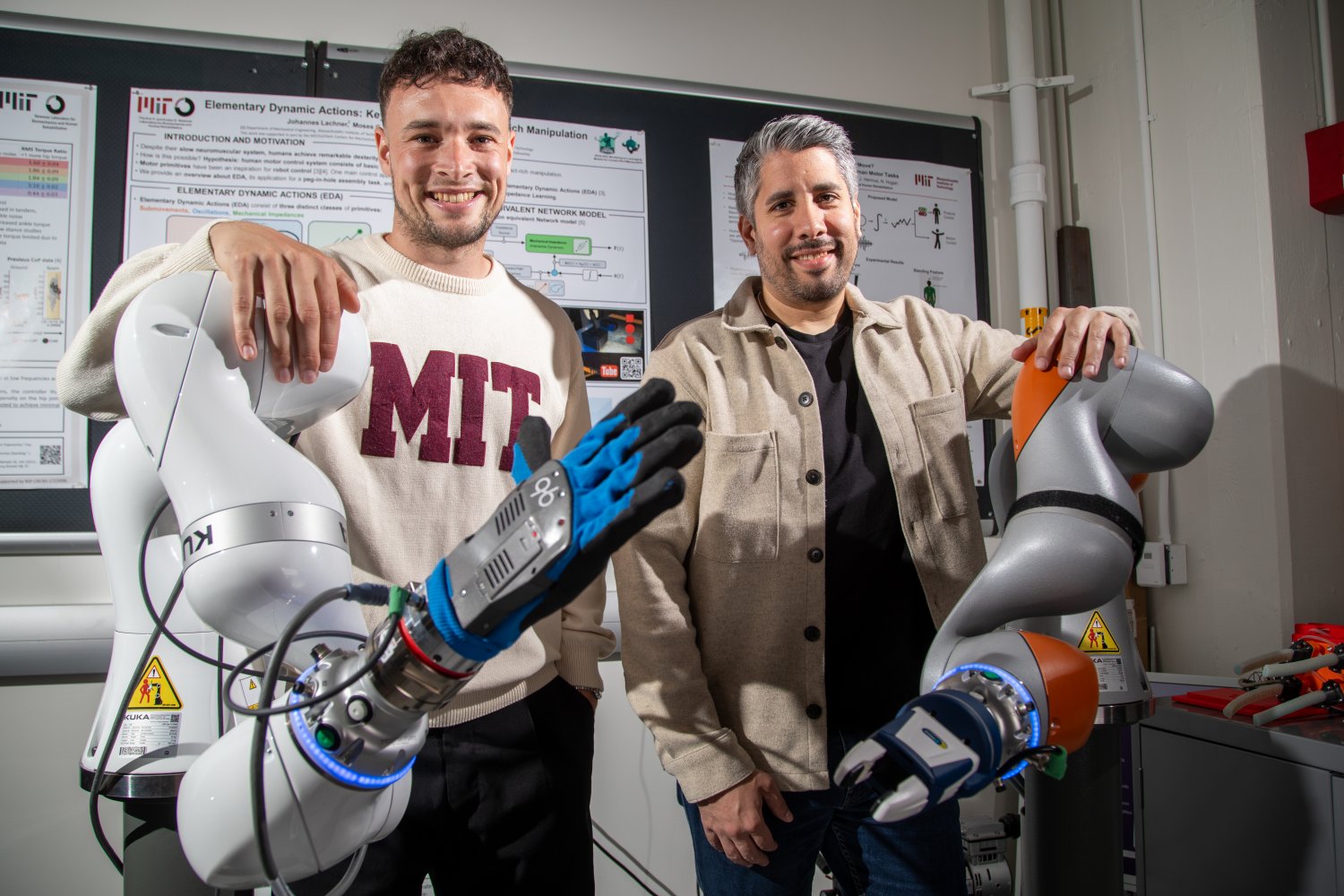
MIT engineers are developing a robotic physical-therapy system that learns how to support stroke patients from real therapists. The project combines generative artificial intelligence with force feedback so that a robot can adjust its assistance to the person exercising, rather than repeating the same movement for everyone.
The work comes from Johannes Lachner, who completed the research as an MIT-Novo Nordisk Artificial Intelligence Postdoctoral Fellow, and Noah Geiger, with guidance from Neville Hogan of MIT’s Newman Laboratory for Biomechanics and Human Rehabilitation. Their system uses a dual-arm robot, transformer-based diffusion models and real-time measurements of force and resistance. In MIT’s August 5 report, the researchers say the goal is to extend the reach of physical and occupational therapists, not replace them.
The model learns from two kinds of demonstrations. In initial experiments with healthy participants, people performed rehabilitation movements such as lifting an arm and reaching outside a horizontal plane while varying how much effort they used. Human operators also guided the robot through contact-rich tasks using telemanipulation. Together, these data teach the model how assistance should change when a patient is actively participating, resisting or tiring.
The approach is different from an AI system that only plans a robot’s path. It tries to learn physical interaction: how to respond to touch, force and resistance. That could allow the robot to provide enough help to keep a patient challenged and engaged, while reducing the burden on therapists who are already in short supply.
The research has moved beyond the laboratory, but it is not yet a clinically proven treatment. At Pfennigparade, an outpatient rehabilitation centre in Munich, therapists wearing force-sensing gloves and cameras are being recorded while treating patients. The data will be used to train therapist-specific models, followed by a longer clinical study with patients who previously received manual therapy.
For patients, the promise is more consistent and personalised support between therapist visits. For clinics, the practical question will be whether the system is safe, useful and affordable in real care. The researchers also see applications in post-surgical rehabilitation, mobility support for older adults and eventually other forms of physical human-robot collaboration. The MIT project shows where AI in health care may be most valuable: as a tool that captures expert practice and makes assistance more adaptive, while keeping clinical judgement and human supervision at the centre.