Slack launches shared code channels for AI agents
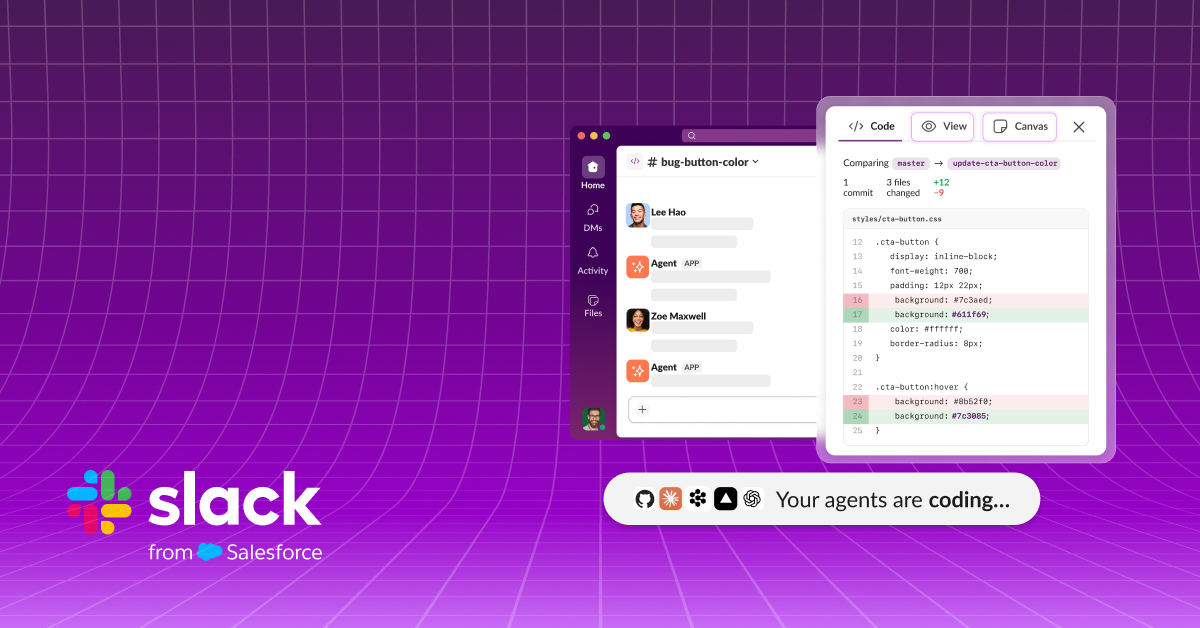
Slack has launched Slack Code, a new type of channel where developers, colleagues and AI coding agents can work on the same software task. The company announced the product on August 20. Instead of sending an agent into a private browser tab or terminal, a user can mention it in a project channel and create a dedicated code channel around the assignment. The space remains visible to the team while the agent works and archives automatically when the task is complete.
The channel is designed to show more than a conventional chat thread. Slack says participants can inspect code diffs, planning documents and live HTML previews, add context, pause or redirect an agent and route consequential changes to a person for approval. The archived channel then remains searchable as a record of the work. Slack Code inherits the workspace's existing permissions and administrative controls, although organisations still need to decide which repositories, data and actions each connected agent may access.
Slack Code is available now for teams using integrations from Anthropic, Cognition, GitHub and Vercel. Their agents include Claude, Devin and GitHub Copilot, while Vercel can generate a live preview after a change. Slack says ChatGPT integration from OpenAI will follow soon, so it should not yet be treated as generally available. According to Slack, more than 70 percent of code channels used internally open and close within one day. That is a company-reported adoption measure, not independent evidence that the feature improves software quality or delivery speed.
The launch matters because coding agents are moving from individual assistants toward shared participants in workplace systems. A code channel lets a product manager describe a problem, an agent draft a change and an engineer review the result in one visible place. That can reduce the context lost between a bug report, an agent session and a pull request. It can also expose assumptions earlier, before automatically produced code reaches users.
For companies, visibility does not remove agent risk. Existing permissions may limit access, but teams still need least-privilege credentials, branch protections, tests, audit logs and explicit approval for sensitive changes. Slack Code's practical contribution is therefore not autonomous coding by itself. It is a collaboration and governance layer around several competing agents, bringing their output, human feedback and approval steps into the communication tool where teams already coordinate work.